
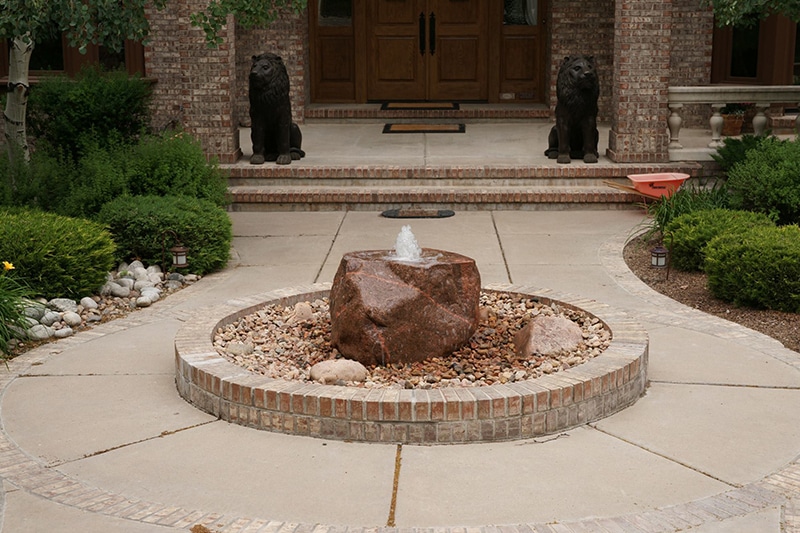
There’s something about the sound of moving water that changes an outdoor space. It softens traffic noise, draws your eye, and somehow makes a patio feel like a retreat instead of just… a patio. And if your home leans modern or contemporary, you don’t have to settle for a koi pond surrounded by faux river rock to get that effect.
At Art of the Yard, we’ve spent over 30 years helping homeowners across metro Denver bring water features into their yards, and we’ve seen a real shift toward contemporary designs. Whether you’re in a new build in Highlands Ranch, a renovated mid-century home in Wheat Ridge, or a downtown Denver loft with just a small courtyard to work with, modern water features can fit the space and match your style.
The idea that modern design has to feel cold or sterile? We don’t buy it. A well-designed contemporary water feature brings nature, movement, and character into your yard without forcing you to compromise on aesthetics. Let’s talk about what works in Denver’s unique climate and how to choose the right feature for your space.
Key Takeaways
- Modern water features for urban Denver homes offer clean lines, geometric shapes, and materials like concrete, steel, and natural stone that complement contemporary architecture.
- Denver’s semi-arid climate makes water features especially valuable—they add moisture, provide evaporative cooling, and attract local wildlife to your outdoor space.
- Wall-mounted fountains and pondless designs are ideal for small urban lots, delivering full visual and audio impact without sacrificing usable square footage.
- Material choices like Corten steel, polished concrete, and brushed stainless steel create striking contemporary aesthetics while withstanding Colorado’s freeze-thaw cycles.
- Many contemporary water features can run year-round in Denver with proper winterization, though reflecting pools and larger installations may need seasonal shutdown.
- Strategic lighting and sound adjustment allow you to customize your modern water feature for both daytime enjoyment and dramatic nighttime ambiance.
Why Water Features Work Well in Denver’s Climate
Denver sits at 5,280 feet with a semi-arid climate, which means low humidity, intense sun, and temperature swings that can catch newcomers off guard. But here’s the thing: these conditions actually make water features more valuable, not less.
First, there’s the practical side. A water feature adds moisture to the air around it, which feels genuinely refreshing during those dry summer months. Sit near a fountain on an August afternoon in Littleton or Castle Rock, and you’ll notice the difference. The evaporative cooling effect can drop the ambient temperature by several degrees in the immediate area.
Then there’s the wildlife factor. Denver’s urban and suburban areas, from Aurora to Boulder to Arvada, are home to birds, butterflies, and other creatures that appreciate a reliable water source. A well-placed water feature becomes a neighborhood hub for songbirds, which adds life and movement to your yard without any extra effort on your part.
And let’s be honest about the sound. Traffic noise, neighbors, leaf blowers, the general hum of suburban life. Moving water masks a lot of that. It’s not about drowning everything out: it’s about creating a layer of pleasant background sound that makes your outdoor space feel more private and peaceful.
The dry climate does mean you’ll deal with some evaporation, and Denver’s mineral-heavy water can leave deposits over time. But these are maintenance considerations, not dealbreakers. With the right design and materials, a contemporary water feature handles Colorado’s conditions just fine.
Popular Modern Water Feature Styles for Urban Spaces
Contemporary water features share some common traits: clean lines, geometric shapes, minimal ornamentation, and a focus on materials like concrete, steel, and natural stone. But within that framework, there’s a lot of room for creativity.
The goal with modern design is usually to let the water itself be the star. Instead of elaborate rockwork or tropical plantings, you’re working with intentional simplicity. A single sheet of water falling into a basin. A bubbler rising from polished stone. A narrow channel that catches the light. These features don’t compete with your home‘s architecture: they complement it.
For homeowners in places like Superior, Louisville, or Englewood, where lot sizes vary and architectural styles range from new construction to thoughtful renovations, the flexibility of contemporary design is a real advantage. You’re not locked into one look.
Wall-Mounted and Vertical Fountains
If you’re working with a small urban lot or a compact courtyard, vertical is the way to go. Wall-mounted fountains and scuppers (those are the spouts that project water away from a wall) take up almost no floor space while delivering the full visual and audio impact of a water feature.
We’ve installed wall fountains using materials like polished concrete, brushed stainless steel, and even weathered Corten steel that develops that distinctive rust patina over time. The water can cascade in a sheet, trickle down a textured surface, or pour from a single spout into a basin below.
For really tight spaces, a bubbler built into an existing wall or a recirculating feature integrated into a planter can work beautifully. You get the sound and movement of water without sacrificing any usable square footage.
Reflecting Pools and Linear Designs
Reflecting pools are essentially still water features, designed to mirror the sky, surrounding plants, or architectural elements. They’re popular in modern landscape design because they’re so visually quiet. No splashing, no movement. Just a calm surface that adds depth and light to a space.
Linear water features, on the other hand, introduce controlled movement. Think of a narrow channel running along a walkway, or a slot overflow where water disappears into a hidden reservoir. These designs emphasize geometry and precision, which pairs well with contemporary homes in communities like Westminster, Northglenn, and Parker.
Both styles work particularly well when integrated with hardscaping. A reflecting pool set into a concrete patio, for example, becomes part of the architecture rather than an addition to it.
Sculptural and Artistic Water Elements
Some homeowners want their water feature to function as art. And why not? A sculptural fountain can serve as the focal point of an entire outdoor space.
These features range from abstract metal forms to custom concrete pieces to natural stone with carefully placed holes for water to emerge and flow. The key is working with a designer who understands both the artistic vision and the practical engineering. Water has to go somewhere, and the mechanics need to be invisible.
At Art of the Yard, we’ve helped homeowners turn magazine inspiration and rough sketches into functional installations. The design process is collaborative, and the result is something unique to your property.
Design Considerations for Small Urban Lots
Not everyone has a sprawling backyard. In fact, many of the properties we work with in Denver, Littleton, and the surrounding metro area have modest outdoor spaces. That’s not a limitation: it just requires thoughtful planning.
The first question is always: what do you want the water feature to do? If it’s about sound, you need some vertical drop or active water movement. If it’s about visual calm, a reflecting pool or a subtle bubbler might be the better choice. If you’re trying to create privacy from neighbors, the location and volume of the feature matter as much as the design.
Scale is important. A feature that’s too large will overwhelm a small space. But something too small can look like an afterthought. We spend a lot of time in the design phase working out proportions, sightlines, and how the water feature relates to everything else in the yard.
Pondless designs are worth considering for smaller lots. These features use a hidden underground reservoir instead of a visible basin, which means you get flowing water without the footprint or maintenance of an open pond. They’re also safer for families with young children or pets.
Lighting matters too. A contemporary water feature can look completely different at night with the right illumination. Underwater LEDs, subtle uplighting, or backlit panels can extend the hours you enjoy the space and add drama after dark.
And don’t forget about sound. In a compact space, you’re never far from the water feature. The sound that seems pleasant from 20 feet away might feel overwhelming at 5 feet. We can adjust flow rates, add baffles, or modify the design to get the volume just right.
Materials and Finishes That Complement Contemporary Architecture
Material selection is where contemporary water features really distinguish themselves from traditional designs. Instead of naturalistic stone and moss, you’re working with industrial and architectural materials that echo the lines of modern homes.
Concrete is probably the most versatile option. It can be cast into nearly any shape, finished smooth or textured, and tinted to match your home’s exterior. Concrete ages well in Denver’s climate, developing character over time without deteriorating.
Corten steel (also called weathering steel) has become popular for its distinctive orange-brown patina. It rusts intentionally, then stabilizes, creating a surface that’s both industrial and organic. It looks particularly striking against the greens of landscaping or the grays of concrete.
Stainless steel offers a cleaner, more polished look. It’s durable, resists corrosion, and reflects light beautifully. For a sleek, almost futuristic feel, brushed or polished stainless is hard to beat.
Natural stone still has a place in contemporary design, but the approach is different. Instead of rough-hewn boulders, you might use honed granite, smooth basalt columns, or precision-cut slabs. The stone is treated as a refined material, not a rustic one.
Glass and acrylic can add transparency and light play. A glass panel with water sheeting down it creates effects that solid materials can’t replicate.
Whatever materials you choose, durability matters. Denver’s freeze-thaw cycles, UV exposure, and mineral-rich water all take a toll. We use upgraded filtration systems on every project and source materials that are built to last. Every installation comes with a 1-year guarantee on workmanship, because we stand behind what we build.
Winter Care and Year-Round Enjoyment in Denver
One of the most common questions we hear is: what happens in winter? It’s a fair concern. Denver winters bring freezing temperatures, snow, and the occasional week where it doesn’t get above 20 degrees.
The answer depends on the feature. Some water features, particularly those with recirculating pumps, can run through the winter as long as the water keeps moving. Moving water is more resistant to freezing, and there’s something genuinely beautiful about a fountain with icicles forming around it.
Other features are better shut down for the season. Reflecting pools, for example, are typically drained in late fall and refilled in spring. The same goes for some larger installations where the risk of ice damage outweighs the benefits of winter operation.
Proper winterization involves draining lines, protecting pumps, and sometimes covering components to prevent damage. It’s not complicated, but it does need to be done correctly. We offer maintenance services for customers who’d rather not handle it themselves, or we can walk you through the process so you’re comfortable doing it on your own.
The good news is that Denver’s winters aren’t constant. We get plenty of sunny, 50-degree days even in January. A well-designed water feature can be enjoyed for more months than you might expect, and the transition between seasons adds visual interest. Frost on concrete, ice formations on steel, the first spring thaw. It’s all part of living with an outdoor feature in Colorado.
Year-round enjoyment is possible with the right planning. It just takes some seasonal attention.
Conclusion
A contemporary water feature isn’t just a design choice. It’s an investment in how you experience your outdoor space. The sound of water, the play of light, the sense of calm it creates. These things matter, especially in the busy metro Denver area where finding a moment of quiet isn’t always easy.
Whether you’re drawn to a minimal wall fountain, a sculptural centerpiece, or a sleek reflecting pool, the key is working with someone who understands both the aesthetic you’re after and the practical realities of building in Colorado. At Art of the Yard, we’ve been doing exactly that for over three decades, helping homeowners in Denver, Highlands Ranch, Castle Rock, Boulder, and communities throughout the metro area create outdoor spaces they actually want to spend time in.
If you’ve been thinking about adding a modern water feature to your property, we’d love to talk. Reach out to Art of the Yard and let’s figure out what’s possible for your space. No pressure, no sales pitch. Just a conversation about what you’re looking for and how we can help make it happen.
Frequently Asked Questions
What types of modern water features work best for small urban Denver homes?
For compact urban lots, vertical and wall-mounted fountains, pondless designs, and bubblers are ideal. These contemporary water features maximize visual and auditory impact without taking up valuable floor space. Reflecting pools and linear channels also work well when integrated into existing hardscaping.
Can water features run during Denver winters?
Yes, many recirculating water features can operate through winter since moving water resists freezing. However, reflecting pools and some larger installations should be drained in fall and refilled in spring. Proper winterization—draining lines and protecting pumps—prevents ice damage during Colorado’s freeze-thaw cycles.
What materials are best for contemporary water features in Colorado’s climate?
Concrete, Corten steel, stainless steel, and honed natural stone are popular choices for modern water features. These materials withstand Denver’s intense UV exposure, freeze-thaw cycles, and mineral-rich water. Concrete is especially versatile, while Corten develops a distinctive rust patina over time.
How much maintenance do modern water features require?
Contemporary water features need regular attention including monitoring water levels due to evaporation, cleaning mineral deposits from Denver’s hard water, and seasonal winterization. Pondless designs require less maintenance than open ponds. Upgraded filtration systems and quality materials reduce long-term upkeep significantly.
Do water features increase home value in Denver?
Well-designed water features can boost curb appeal and create desirable outdoor living spaces, which often increases property value. Modern, professionally installed features that complement a home’s architecture are particularly appealing to buyers in Denver’s competitive real estate market.
How do contemporary water features help with Denver’s dry climate?
Water features add moisture to the surrounding air, providing natural evaporative cooling that can lower ambient temperatures by several degrees. This is especially refreshing during Denver’s dry summer months and also attracts beneficial wildlife like songbirds and butterflies to your yard.
