
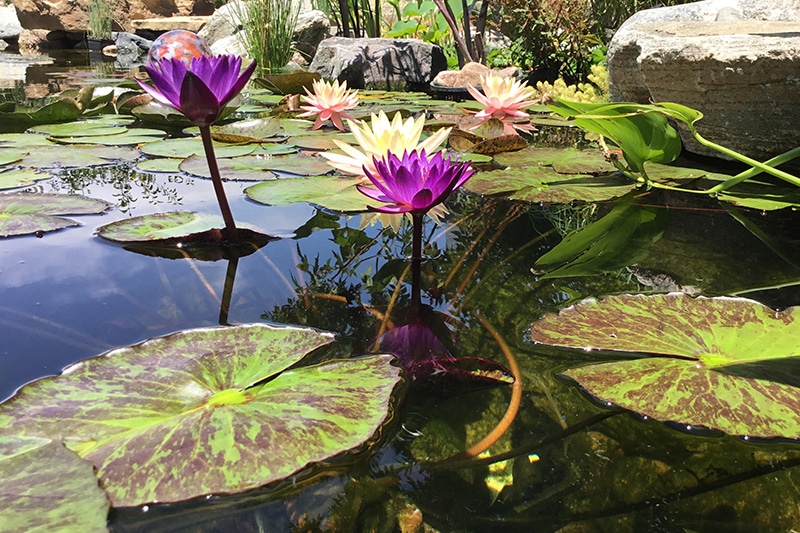
If your pond turns pea green just when you want to enjoy it, you’re not alone. In Metro Denver, algae moves fast because of altitude, sun, and nutrients. At Art Of The Yard, we design, build, and maintain koi ponds and water features across Denver, Littleton, Highlands Ranch, Castle Rock, and beyond. Here’s how we approach algae control so you can keep clear, healthy water without constant stress.
Key Takeaways
- In Denver ponds, stronger UV, temperature swings, and nutrient runoff drive blooms, so test pH, alkalinity, and hardness regularly to guide algae control.
- Identify green water vs. string algae and watch for blue‑green algae warning signs (paint‑like scum, strong odor, gasping fish) to choose safe, timely actions.
- Design for prevention: aim for ~3 feet of depth in key zones, add shade, ensure strong circulation with waterfalls or streams, and size filtration to fish load.
- Cut nutrient inputs by skimming and vacuuming, feeding only what fish eat in minutes, stocking sensibly, and targeting 50–60% summer plant coverage for natural shade.
- Boost oxygen and biology with bottom diffusers over fountains, use beneficial bacteria under stable water chemistry, and remove string algae manually with rakes or nets.
- Use algaecides carefully—treat small sections, add aeration, follow EPA labels and Colorado rules, and follow a seasonal schedule for cleanouts, monitoring, and winter aeration.
Why Algae Blooms Happen In Denver Ponds
High-Altitude Sunlight And Temperature Swings
Denver’s high elevation means stronger UV exposure. More light means faster photosynthesis, so algae get a jumpstart. Spring and early summer temperature swings add to the problem by stressing the ecosystem, which opens the door to blooms. We see this in Littleton, Parker, and Arvada every year.
Nutrient Sources: Lawns, Geese, And Irrigation Return Flows
Most blooms trace back to excess nutrients.
- Overfertilized lawns leak nitrogen and phosphorus into ponds after storms or irrigation cycles.
- Goose droppings and decaying leaves add organics that algae love.
- Bare soil and eroding edges wash in fine sediments that carry nutrients.
If you’re near a greenbelt in Westminster or a golf course in Highlands Ranch, runoff control matters even more.
Water Hardness, Alkalinity, And pH Considerations
Front Range water often runs hard with higher alkalinity and a pH that favors algae growth. In Aurora and Northglenn we regularly test for pH drift during summer. Balanced water chemistry makes treatments work better and helps beneficial bacteria do their job.
Identify The Algae You Have
Green Water Vs. String Algae
- Green water is free-floating algae that turns ponds into cloudy pea soup.
- String algae forms hair-like mats on rocks and in streams. It loves shallow, sunny edges and slow-moving water.
Blue-Green Algae Warning Signs
Cyanobacteria can look like paint or scum on the surface with a deep blue-green color and a sharp odor. If fish hang at the surface gasping, or you see a sudden die-off, stop feeding, add aeration, and call a pro. We take these seriously in Boulder, Superior, and Louisville because some types can produce toxins.
Simple At-Home Checks And When To Lab Test
- Use a basic kit for pH, ammonia, nitrite, and nitrate.
- Check water clarity with a simple disk or just a marked stick.
- If color or odor persists, or fish look stressed, get a lab test for nutrients or algae type. We can help you decide what to test and when.
Prevention Through Design And Maintenance
Shade, Depth, And Circulation For Balance
Good design prevents most algae problems. We aim for a minimum of about 3 feet of depth in key zones, strong circulation, and a mix of shade from plants or structures. Waterfalls and streams add oxygen and keep water moving. Art Of The Yard also starts projects with upgraded filtration that matches pond size and fish load.
Skimming, Vacuuming, And Organic Load Reduction
Leaves, pollen, and dust are constant in Denver. Routine skimming, netting in fall, and seasonal cleanouts keep organics from becoming algae food. In Wheat Ridge and Englewood, windblown debris is the number one cause of mid-summer spikes we’re called to fix.
Fish Stocking, Feeding, And Plant Ratios
Overstocking and overfeeding drive nutrient levels up.
- Feed what fish will eat in a couple of minutes.
- Stock sensible numbers for your pond size.
- Target about 50 to 60 percent surface coverage with lilies and marginals during summer to shade the water and compete with algae.
Runoff Buffers, Mulch, And Fertilizer Practices
Install buffer plantings around the pond, use mulch on slopes, and keep fertilizers away from edges. If you must fertilize, choose slow-release products and follow the label. In Castle Rock, Parker, and Highlands Ranch, angled downspouts and shallow swales can redirect nutrient-rich water away from the pond.
Aeration, Biology, And Manual Control
Bottom Diffusers Vs. Surface Fountains
Bottom diffusers push oxygen from the deepest point so the whole water column benefits. Surface fountains add movement and look great, but they do less for deep oxygen. Many ponds do best with a diffuser on a timer and a waterfall or stream for surface turnover.
Beneficial Bacteria And Enzymes: Roles And Limits
We use bacteria to break down sludge and bind nutrients. They work best with good circulation, stable pH, and reasonable fish load. If runoff keeps fueling the system, bacteria alone won’t hold the line.
Barley Straw, Aquatic Plants, And Shading Dyes
- Barley straw can help prevent mild blooms as it decomposes.
- Aquatic plants outcompete algae and provide habitat.
- Dyes cut light penetration for deeper ponds without plants. We avoid dyes in shallow, plant-heavy koi ponds.
Manual Removal Tools And Techniques
For string algae, a simple algae rake, twirl stick, or net removes big volumes fast. Vacuuming pockets and shelves helps a lot. We coach property owners in Arvada and Westminster on easy weekly habits that take 10 minutes and make a visible difference.
Safe And Legal Use Of Algaecides
Choosing Actives For Colorado Waters
Copper and hydrogen-peroxide based products are common. We match the product to your algae type, water hardness, and fish sensitivity, especially with koi. Label matters. We only use EPA-registered products and follow Colorado guidance.
Dosage, Temperature Windows, And Oxygen Risks
Treat smaller sections over several days, aim for cooler parts of the day, and add aeration. As algae dies it uses oxygen, which can stress fish. We monitor dissolved oxygen closely in summer.
Protecting Fish, Pets, And Wildlife
Keep pets away until the label says it is safe. Never exceed dosage, and avoid contact with planted areas that you want to keep. If you have frogs or turtles, tell us so we can adapt the plan.
Local Rules, Water Rights, And Downstream Use
Do not discharge treated water to storm drains or natural streams. Along the Front Range, downstream users and water rights complicate releases. We plan drawdowns and refills carefully, especially in Boulder and Louisville where rules are strict.
Denver-Specific Seasonal Care Schedule
Spring Startup: Cleanout, Tests, And Gradual Aeration
- Remove leaves and sludge before warm weather hits.
- Rinse and restart filters, check pumps and UV clarifiers.
- Bring aeration online in stages so bacteria and fish adapt.
Peak Summer: Monitoring, Spot Treatments, And Shade
- Add floating plants or temporary shade during heat waves.
- Skim daily during cottonwood season in Northglenn and Aurora.
- Spot treat string algae in small sections and boost aeration.
Fall: Leaf Control, Nutrient Binding, And Overwinter Prep
- Net the pond before the first big drop in Superior and Littleton.
- Vacuum shelves, trim plants, and reduce feeding as temps fall.
- Check de-icers and airline placement so you’re ready for cold snaps.
Winter: Aeration Under Ice And Safety Checks
Keep a small opening with a bubbler or de-icer to vent gases. Do not break ice with force. Quick checks after storms in Englewood, Castle Rock, and Parker prevent winterkill.
Conclusion
Clear water comes from balance. Light, nutrients, and oxygen all play a part, and Denver’s climate pushes those levers hard. We design ponds with the right depth, filtration, and circulation, then back that up with smart maintenance. That is how Art Of The Yard keeps koi and water gardens clear across Metro Denver, from Highlands Ranch to Wheat Ridge.
If you’re ready to stop fighting algae and get back to enjoying your pond, we can help. Art Of The Yard offers design, renovation, upgraded filtration, seasonal cleanouts, and winterization. Our Master Designer is hands-on, and our workmanship is guaranteed for a year. Contact us to schedule a visit in Denver, Littleton, Castle Rock, or any of the surrounding cities. Let’s get your water clear and keep it that way.
Frequently Asked Questions
What causes sudden algae blooms in Denver ponds?
Algae blooms in Denver ponds accelerate due to strong high-altitude sunlight, spring temperature swings, and excess nutrients from lawn fertilizers, goose droppings, leaves, and eroding soil. Hard, alkaline Front Range water and pH drift further favor algae growth. Managing runoff, organics, and water chemistry reduces bloom pressure.
How do I tell green water apart from string algae?
Green water is free‑floating algae that turns the pond into cloudy pea soup. String algae forms hair-like mats on rocks and shallow, sunny edges, especially in slow-moving areas or streams. Identification matters because removal and treatment differ: manual raking targets string algae, while filtration, UV, and biology address green water.
What are the best prevention steps for algae control in Denver ponds?
Design for balance: aim for about 3 feet of depth in key zones, strong circulation with waterfalls or streams, and upgraded filtration sized to pond and fish load. Skim and vacuum to reduce organics, stock and feed fish modestly, provide 50–60% summer plant cover, and buffer or redirect nutrient-rich runoff.
Are algaecides safe for koi, pets, and wildlife in Colorado ponds?
Yes—when you choose EPA-registered products and follow the label. Match copper or hydrogen-peroxide actives to algae type, hardness, and fish sensitivity. Treat in small sections, add aeration, and avoid planted zones you want to keep. Keep pets away until the label allows, and never discharge treated water downstream.
Do UV clarifiers help with algae control, and how should I size them?
UV clarifiers are effective for green water by sterilizing free‑floating algae as water passes the lamp. Size by flow rate and pond volume so contact time meets the manufacturer’s “clarifying” wattage, not just “sterilizing” for microbes. Keep quartz sleeves clean and replace bulbs annually for consistent performance.
How long does it take to clear a pea‑green pond?
With proper steps—debris removal, balanced pH/alkalinity, improved circulation, UV clarification, and controlled spot treatments—noticeable clarity often returns in 3–10 days. Heavy nutrient loads or ongoing runoff can extend timelines to a few weeks. Work in stages, boost aeration during treatments, and address the nutrient source to prevent relapse.
